Alternative to reading glasses
July 2023
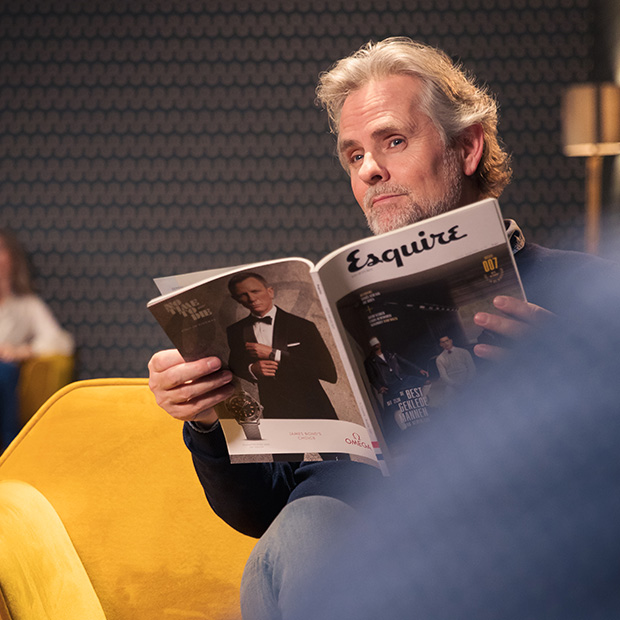
Are you finding it increasingly difficult to read the menu in a restaurant? Or is it only possible to read a book when you use an extra lamp? Then there is a good chance that you suffer from presbyopia.
This is a common and natural eye condition that everyone will eventually experience. For some, it starts around the age of 40, for others it may not start until around the age of 55. Although wearing (reading) glasses is a good solution, there are also alternatives that are less of a hassle and give you sharp vision at any time of the day. In this article, we will zoom in on these alternatives so that you can make a well-considered choice about which solution best suits your lifestyle.
Multifocal glasses
When you need glasses and already have reading problems, you often end up with glasses with multifocal lenses. These offer a gradual transition between different strengths. Ideal when you experience both distance and near vision issues. Instead of alternating between regular glasses and reading glasses, glasses with multifocal lenses offer a perfect alternative. With these, you only need one pair of glasses.
There are also some disadvantages to wearing glasses. What about foggy lenses when you enter a warm room from a cold environment? Or droplets on your lenses when you walk or cycle in the rain? You also need to regularly visit the optician for a new eye measurement and to have new glasses or lenses fitted. This costs money, but also time. Additionally, you always have to make sure you’re looking through the right part of the lenses to avoid a distorted image. Nothing is more annoying than, for example, looking back while parking and having blurry vision. Or when you look through the bottom part of your glasses at a step or curb and misjudge the distance.
Contact lenses
Monovision
Monovision, or adjusting one contact lens so you can read better with it (distance vision becomes slightly less clear), can be an effective alternative to reading glasses. This can be done by wearing a contact lens for near vision in one eye.
Monovision is not suitable for everyone. It always takes some time to get used to it. Your brain needs to adapt to the different strengths of your eyes. Additionally, depth perception will decrease.
Another disadvantage is that the difference in strength between the two eyes must become increasingly larger because your natural eye lens continues to age. After a while, this solution is no longer sufficient to maintain sharp vision at all distances.
Multifocal Contact Lenses
Just like with multifocal glasses, multifocal lenses bring the same advantages. Additionally, you don’t have the disadvantages of foggy glasses or raindrops affecting your vision. This can be a reason for some people to choose contact lenses, as it gives you a younger and more modern appearance, for example. Or simply because you don’t like wearing glasses.
A disadvantage of multifocal contact lenses is that the image can sometimes be less stable and sharp. This is because the lens moves over your eye when you blink. So you never look through the contact lens in exactly the same way. Additionally, the moisture in your eye, and thus the contact lens, is not the same throughout the day. This can also make the image less sharp at times. The image quality when looking through a dry lens is much worse than through a well-moisturized lens. Finally, you may experience irritation from, for example, blowing sand.
Lens implantation instead of reading glasses or contact lenses
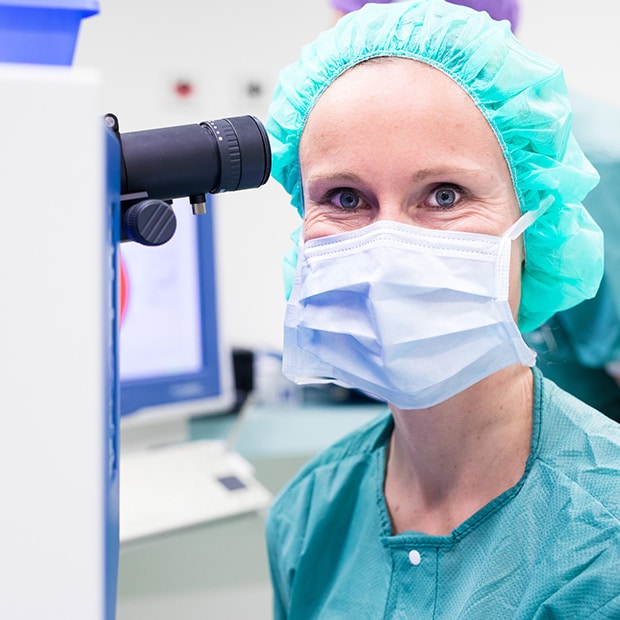
A permanent solution for reading glasses or contact lenses (with reading part) is a lens implant. At FYEO we call this the ReplaceLens treatment. In contrast to glasses or contact lenses that often have to be adjusted as you get older, lens implants offer permanent correction of vision after just 1 procedure. Completely adapted to your personal situation, whereby we always aim for the best result. After the lens implant, no more adjustments to the strength are necessary because the parts in the eye that determine the strength no longer change. In the long term, a ReplaceLens treatment can be cost-saving and ensure an improved quality of life.
Treating one eye
Do you still see clearly in the distance and do you only have difficulty with close-up (reading)? Then a Readon ReplaceLens treatment may be more suitable for your situation. Only 1 eye is treated, which means you can go on for a few years without (reading) glasses or contact lenses. In the future, when the other eye deteriorates further due to natural aging, this eye will also have to be treated to get your full vision sharp again.Another solution is to have 1 eye lasered for near vision. With both eyes together you can see sharply at multiple distances. Depending on your personal situation, we will look at what the best solution is for you.
What suits me best?
Would you like to know if lens implantation is suitable for you? Then request a completely free and non-binding preliminary examination. We’ll measure your eyes from top to bottom, and afterwards, you’ll hear in a conversation with the ophthalmologist which treatment is most suitable for you. You’re not committed to anything, but you’ll know what’s best for your eyes.
Would you prefer to receive some additional information first? That’s certainly possible. Simply request our information brochure or come to one of our information evenings. This is an evening at our clinic where, in addition to receiving extensive information about FYEO and our solutions for a glasses-free life, you can take a look in the operating room and where there’s plenty of room for questions. There’s also the opportunity to have a Quick Scan performed. This is a quick measurement after which we can give you an indication of whether you’re eligible for treatment. It’s important to remember that not everyone is suitable for lens implantation and that there are certain conditions and risks involved. A preliminary examination is therefore essential to determine if and, if so, which treatment is suitable for you.